

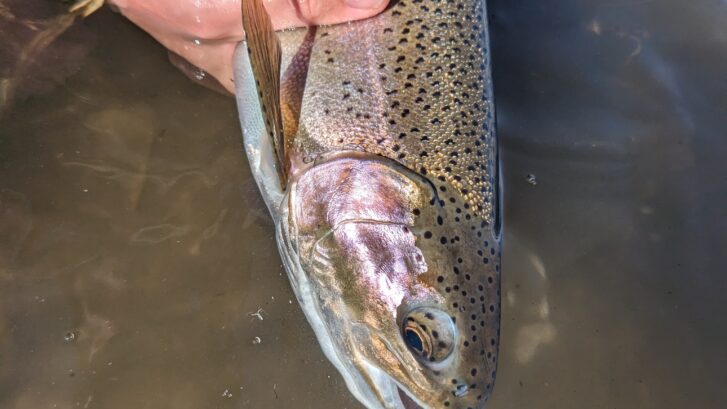
Autumn has firmly settled across Long Valley, bringing crisp Eastern Sierra mornings, bright bluebird skies, and textbook transitional conditions to the Upper Owens just below Mammoth Lakes. Flows throughout the meandering meadow sections are running skinny, low, and clear. We are officially in the waiting window for the first substantial push of Crowley Lake’s trophy migratory browns and rainbows. While a few eager scouts may begin nosing their way past the monument as overnight temperatures plunge into the thirties and forties, the primary run is still on deck. For now, the game demands stealth and technical presentations, focusing on the river’s spirited resident population tucked tight against sod cutbanks, deep corner pools, and darker runs.
Because the water is so low and clear, heavy wading or careless footsteps along the fragile grassy banks will send shockwaves through an entire bend before you even make a cast. Keep your profile low, off the skyline, and approach each pool with deliberate caution. Subsurface tactics remain the most productive way to consistently bend a rod through the middle of the day. Rigging small, dense beadheads—such as #16–18 Perdigons, Flashback Pheasant Tails, and #18–20 Zebra Midges—on long, fine 5X tippets ensures your bugs drop quickly into narrow holding zones without spooking wary fish. An adjustable indicator or a delicate Euro nymphing rig works wonders in picking apart the deeper tail-outs and gravel transitions.
For anglers looking to trigger a violent reaction strike from an early-run lurker or a territorial resident predator, working streamers through the deeper buckets and undercut walls is well worth the effort. Covering water with down-and-across presentations using #6–10 Slumpbusters, Woolly Buggers, or compact sculpin patterns on light sink-tips or long leaders on a floating line can produce some violent takes, especially around dawn and dusk. Meanwhile, surface enthusiasts will find dependable dry-fly sport during the morning to midday window. Hatches of #18 Baetis (BWOs) alongside lingering late-season terrestrial patterns—like low-profile foam ants, beetles, and Parachute Adams—can offer dry-fly action on smaller wild browns and rainbows eager to capitalize on the hatch. Keep a close watch on incoming weather fronts, as the first sustained cold snap or low-pressure cloud cover will likely sound the opening bell for the lake-run trout.
Call or text the STM Fly Shop in Bishop California for more details or to book a guided tour on the scenic Upper Owens River.
760-873-0010